
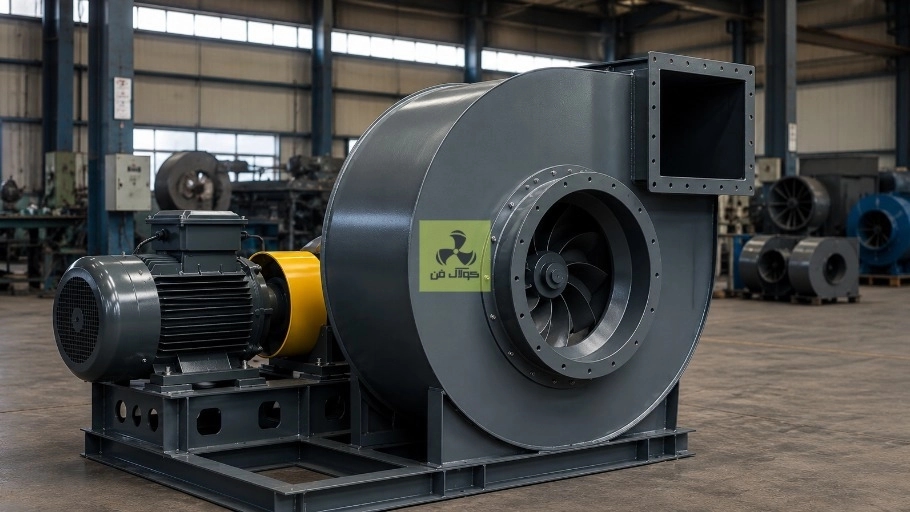
Centrifugal fan
همین الان تماس بگیرید
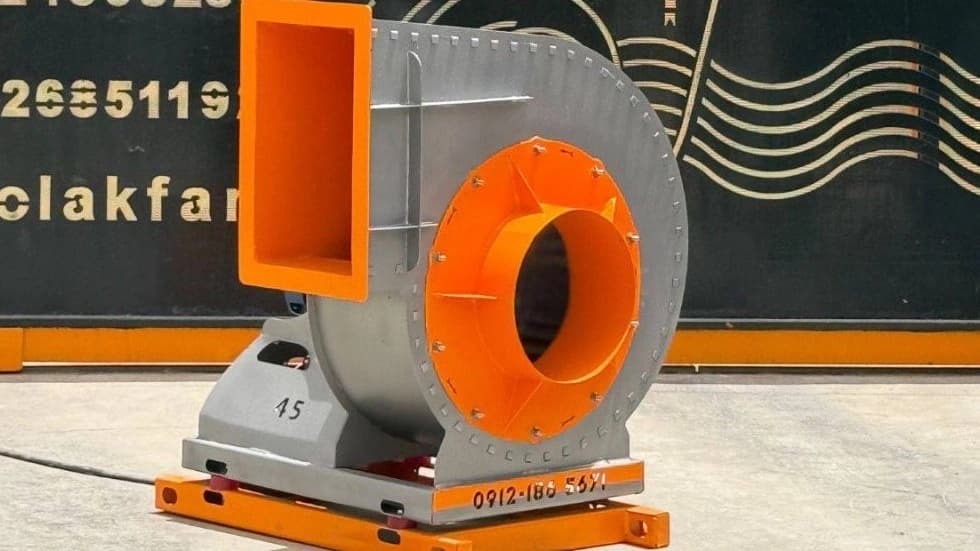
3. Geometric design of blades
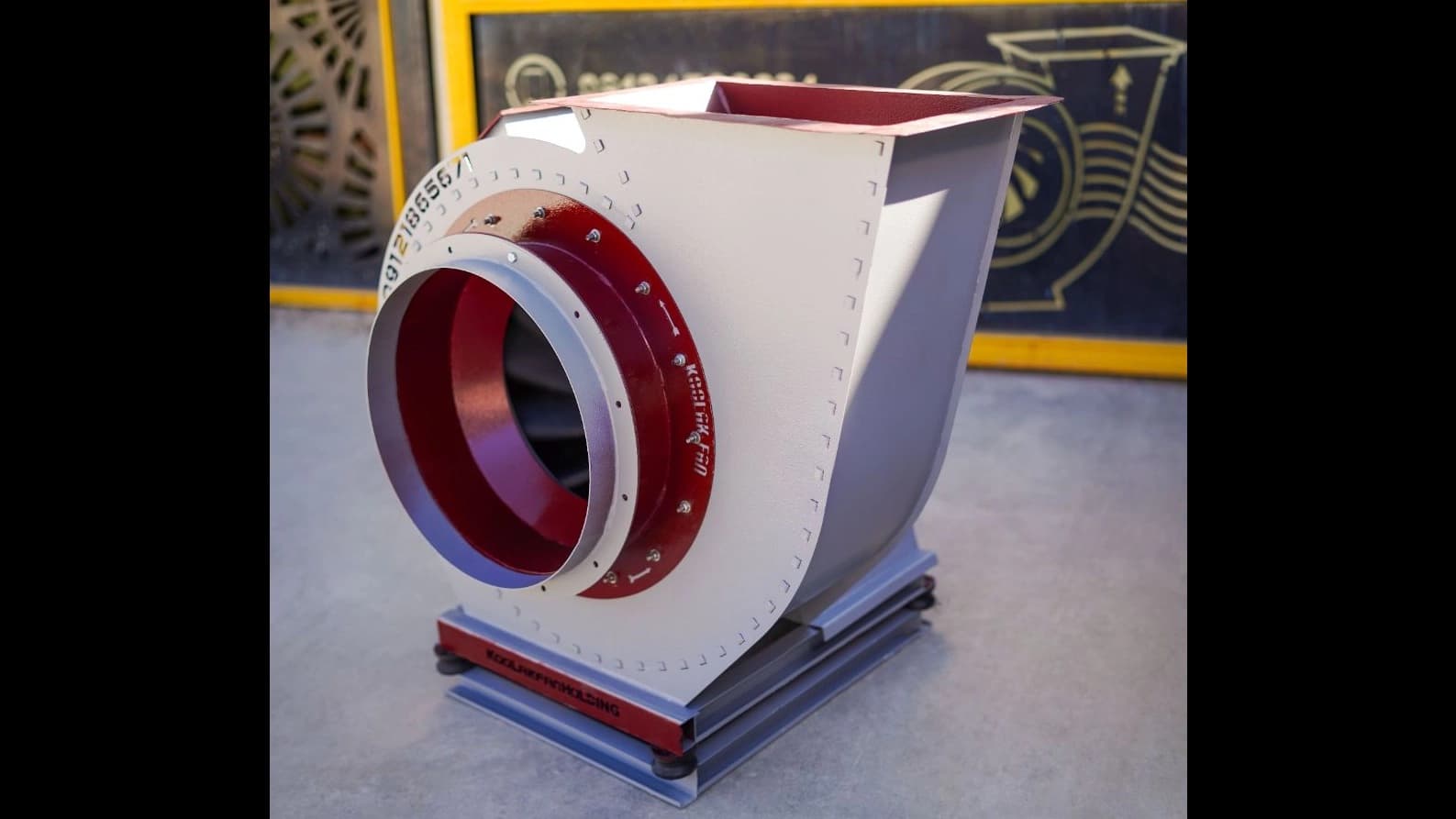
4. Structural components
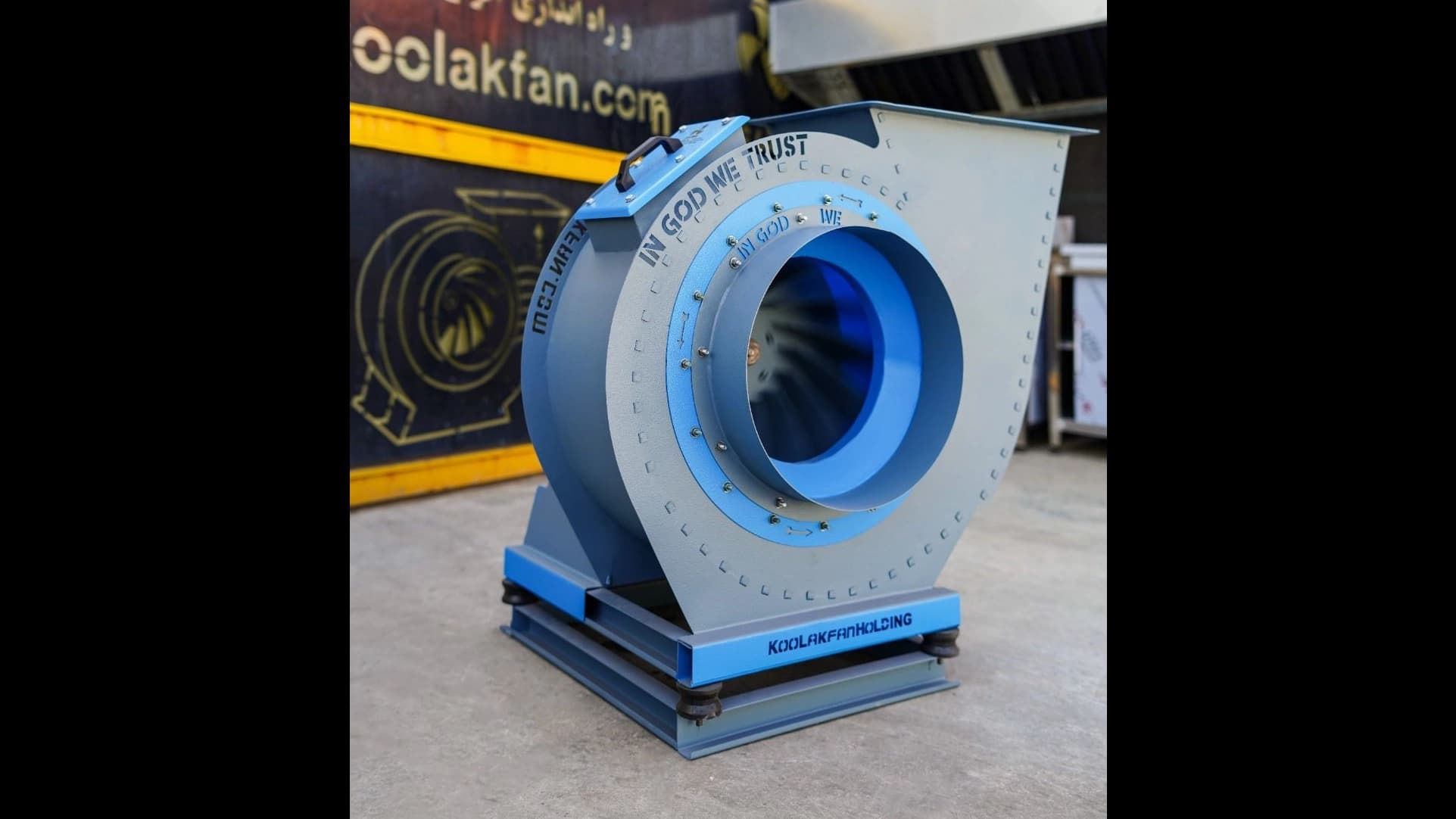
A standard centrifugal fan consists of the following parts:
ηtotal
A standard centrifugal fan consists of the following parts:
Shaft and bearing: transmission of power from the engine to the propeller.
Supporting base: absorb vibration and maintain axis alignment.
Engine cover: protection against dust and heat.
Volute: converting kinetic energy into pressure and directing the air out.
Conical inlet (Inlet Bell): reducing pressure drop and increasing flow uniformity.
Adjustment system (Dampers / Louvers): air volume and pressure control.
6. Comparison of centrifugal fan with axial fan
The overall efficiency of the centrifugal fan consists of three parts:
=
ηmechanical
×
ηvolumetric
×
ηaerodynamic
Mechanical efficiency depends on bearing and power transmission (95-98%).
Centrifugal fan is a combination of mechanical engineering, aerodynamics and industrial design.
Centrifugal fan feature, axial fan, high output air pressure (up to 25000 pascal), low (up to 2500 pascal), medium moving volume, very high energy consumption, less noise, more noise (controllable with new design), less application in heavy industries, dust collectors, general cooling central ventilation, wind tunnel, cooling tower
Progress in the design of blades and smart systems will determine a sustainable and low-consumption future for fan technology.
Centrifugal fans are used in hundreds of different applications, including:
One of the important challenges in centrifugal fans is the noise resulting from the rotation and turbulence of the air.
To reduce noise, the following solutions are used:
The sound usually ranges from 60 to 85 dB and is adjusted depending on the type of fan and the environment.
The material used in making the fan depends on the working environment:
With the ability to produce high pressure, adaptability to harsh conditions and the possibility of precise performance control, these fans are considered the beating heart of many industries.
Centrifugal fan is one of the most widely used equipment in ventilation, gas transmission, dust removal and cooling industries. Its main function is based on centrifugal force; That is, the incoming air enters the center of the propeller and is thrown towards the external environment due to the rotation of the propeller at high speed. These types of fans are usually used in industrial and building ventilation systems that require high air pressure.
Types of centrifugal fans
Centrifugal fans are designed and manufactured in several types, each of which has a specific application:
Licence type, features, applications
Forward curved blade, large volume of air with low pressure of air conditioning, coolers
Radial vane (Radial) high resistance against pollution and dust of heavy industries, industrial filter
Backward curved blades, high efficiency and low noise industrial ventilation, HVAC systems
Airfoil blade quiet operation and low energy consumption in office and hospital environments
Applications
Centrifugal fan is used in many cases:
Building air conditioning systems (HVAC)
Cement, steel and mining factories
Industrial filters and dust collectors
Dryers and furnaces
Cooling electronic equipment
Advantages and disadvantages
Advantages:
Ability to produce high pressure
Suitable performance in heavy applications
Ability to work in contaminated environments
High useful life
Disadvantages:
Centrifugal fan is one of the most vital components of ventilation and air transmission systems due to its good efficiency, high pressure power and wide application in industries. The development of new designs of these fans is moving towards reducing energy consumption, reducing noise and increasing useful life.
In many ventilation systems, air pollution control, and industrial processes, moving and transporting air and gases is one of the main needs. Fans are designed for this purpose to convert mechanical energy into kinetic and pressure energy in the air flow.
In many ventilation systems, air pollution control, and industrial processes, moving and transporting air and gases is one of the main needs. Fans are designed for this purpose to convert mechanical energy into kinetic and pressure energy in the air flow.
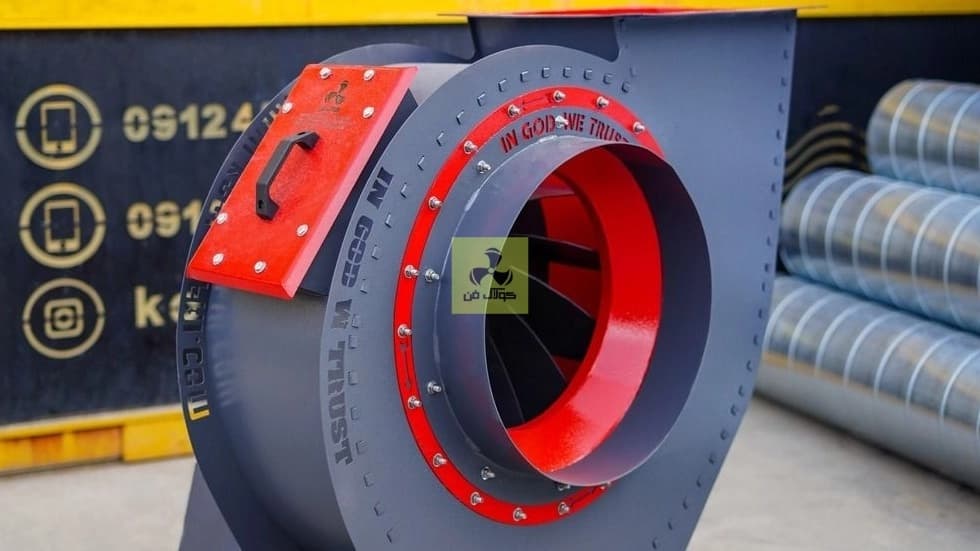
The basis of the work of the centrifugal fan is the use of Centrifugal Force.
- Impeller:The most important part of the fan that transfers mechanical energy to the air flow. The design of the blades (forward bend, backward bend, radial, airfoil) plays a fundamental role in the efficiency of the fan.
- Fan housing (Casing or Housing):The housing is usually designed in a spiral shape to guide the air flow correctly and prevent energy loss. reduce the pressure and turbulence of the air at the inlet.
- Outlet: The outlet of the compressed air flow, which is usually connected to the channel or ventilation system. The motor may be electric, diesel or turbine.
- Bearings and rotation axis:High-quality bearings are essential to reduce friction and vibration.
- Body and support base:Must be durable, strong and anti-vibration because fans usually work in harsh industrial conditions.
Centrifugal fans are made in several different designs. Each type has different performance, efficiency, sound and pressure:
Centrifugal fans are made in several different designs. Each type has different performance, efficiency, sound and pressure:
Functional characteristics
Centrifugal fans are used in most industries and facilities:
Periodic maintenance and checks
Centrifugal fan needs continuous maintenance for reliable operation:
Safety tips
When working with a centrifugal fan, the following must be observed:
Advantages and disadvantages of centrifugal fan
These parameters should be considered when choosing a fan:
Criteria for choosing the right centrifugal fan
A look at the progress of centrifugal fans
A look at the progress of centrifugal fans
In recent years, there have been significant developments in the field of designing and manufacturing fans:
Centrifugal fan is one of the most important equipments in ventilation and air transmission industries, which plays a vital role in maintaining the stable performance of systems. The power of producing high pressure, high durability, and its adaptability to different environments have made it have a special place in all areas from heavy industries to commercial buildings.
How to choose the best centrifugal fan for our factory?
What is the main difference between a centrifugal fan and an axial fan?
How much time is needed to order the manufacture of a dedicated centrifugal fan?