
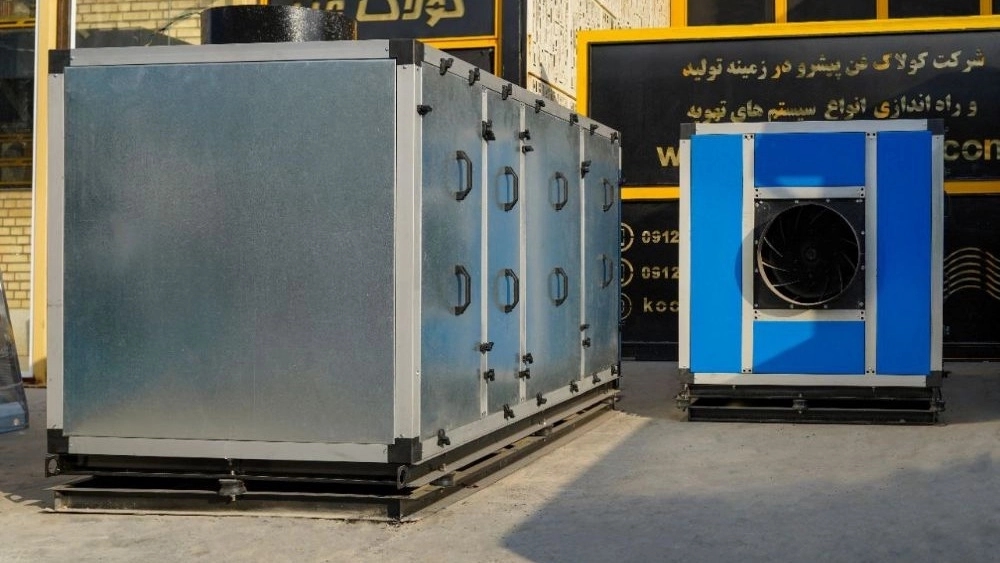
Hygienic Air Handling Unit (AHU)
Hospital air conditioner or hygienic air conditioner (Hygienic Air Handling Unit - AHU) is a special type of air conditioner that is designed and manufactured in compliance with the strictest standards for extremely sensitive environments such as hospitals, operating rooms, laboratories, pharmaceutical industries, and clean rooms. The main purpose of these air conditioners is to provide air with the highest level of cleanliness, precise control of temperature and humidity, and prevent the transmission of pollutants and pathogenic agents.
In medical environments and hospitals, air quality directly affects the health of patients, medical personnel, and even test results. Contaminated air can lead to:
Increase in hospital infections (Nosocomial Infections)
Delay in the recovery of patients
Spread of diseases and microorganisms
Damage to sensitive medical and laboratory equipment
Decreasing the concentration and efficiency of medical personnel
Therefore, hospital air conditioner plays a vital role in creating a safe, sterile and comfortable environment. slow.
Important parts in Shiraz hospital ventilators
Mixing box: where fresh air and return air (if any) are mixed together.
Filtration section: includes several filter stages (pre-filter, bag, HEPA/OLPA).
Cooling coil: to cool and dehumidify the air.
Heating coil: to heat the air.
Supply Fan: to flow conditioned air towards Spaces.
Exhaust fan (if required): to discharge polluted air from the environment.
Humidifier (optional): to increase air humidity.
Drain tray: to collect and drain distilled water.
Features of hospital air conditioners or hygienic blizzard fans
Kolak Fan hospital ventilators have special features that distinguish them from normal ventilators:
Multi-stage and high efficiency filtration:
Pre-Filter: to remove larger particles and protect subsequent filters.
Bag Filter: to remove medium particles (with M5 to F9 efficiency). (HEPA Filter): It is the most important filter in the hospital air conditioner. This filter is able to remove 99.97% of particles with a size of 0.3 microns (including bacteria, viruses and very small suspended particles). This filter is usually placed in the final stage of filtration.
Body material and structure:
Smooth and non-porous internal surfaces: to prevent the accumulation of particles, dust, fungus and bacteria growth and ease of cleaning. Stainless steel or aluminum with sanitary coatings are usually used.
Resistance to disinfectants: The materials used in the internal structure of the air conditioner must be resistant to chemicals and disinfectants. High quality, non-absorbent sealing tapes are used.
Visit doors with sanitary locks: for easy access for service and maintenance, but with a locking mechanism and strong sealing.
Fan system:
Fans with high efficiency and easy cleaning: fans are usually Plug Fan type with EC (Electronically Commutated) motors, which are without belts and pulleys. and reduce the production of particles and pollution to a minimum.
The absence of pulleys, belts and bearings in the air flow path: to prevent the production of particles due to wear and reduce the risk of contamination. Accurate humidification and dehumidification: In hospitals, the humidity level is very important. Very low humidity can dry out the respiratory tract and increase susceptibility to infection, while high humidity can intensify the growth of fungi and bacteria. Hygienic air conditioners are equipped with advanced humidity control systems.
Positive and negative pressure (Positive/Negative Pressure Control):
In different parts of the hospital, the need for air pressure control is different.
Positive pressure: in operating rooms, ICU, and isolation rooms for patients with weak immune systems, to prevent contamination from outside, the air pressure inside the room is slightly higher than the corridor.
Negative pressure: In the isolation rooms of infectious patients (for example, tuberculosis or corona patients), the air pressure in the room is slightly lower than in the corridor to prevent the exit of pollutants and the transfer of the disease to the outside of the room. Hospital ventilators have the ability to precisely adjust these pressures.
For more information and free consultation, contact the experts of Kolak Fan Company
Email: koolakfan@gmail.com
Contact numbers:
09121865671
09124598284
09177002700
Whatsapp: